


Following Vol. 1, which traced the story of RROOM's beginnings, this issue turns to the journey that led us to Umbra, RROOM's first property. We spoke with Yuichi Omoto of Masuya Asset Partners Asia Pte. Ltd. — the seller of Umbra — about how it came to be.
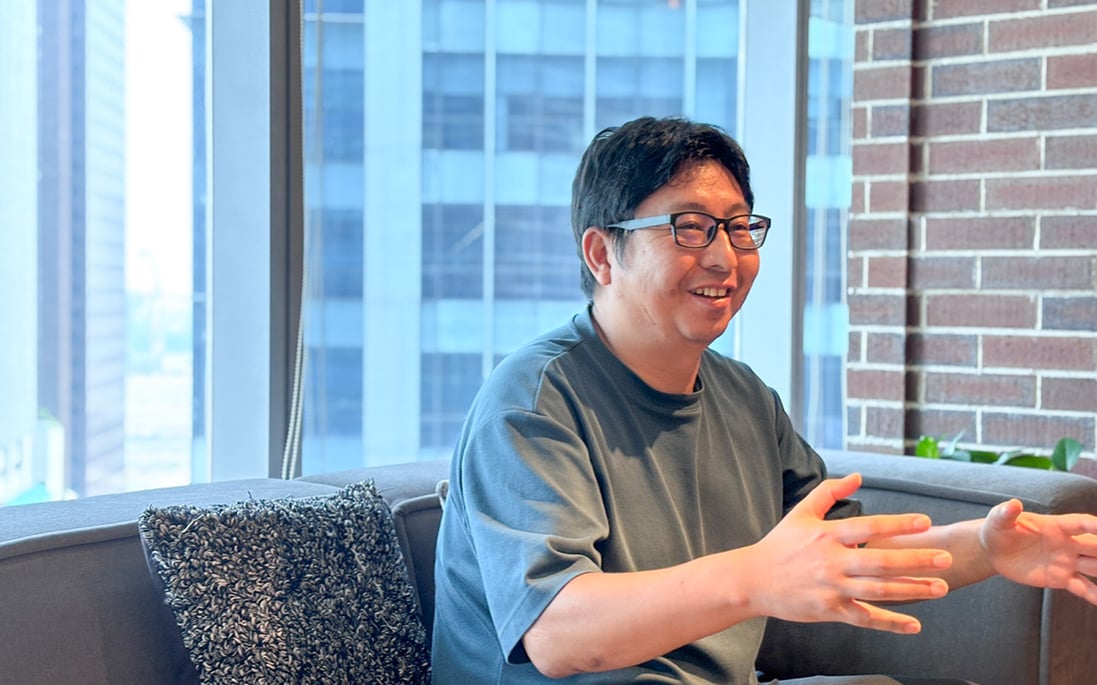
After studying architecture at university, Omoto spent 2009 to 2018 at a Japanese company, working on real estate investment and revitalisation projects for office buildings. In 2018, he joined Masuya Asset Partners, and today, based in Singapore, he works across Thailand, Cambodia, and Japan, driving a range of ventures in overseas real estate.
A New Spark for Bangkok's Housing Market
Masuya Asset Partners' roots trace back to a corporate group with a history spanning more than a century. What began as investment in income-producing real estate — a way of putting the group's assets to work — has since grown into a broader practice spanning real estate investment, the revitalisation and development of existing properties, and business overseas, with active investment both in Japan and abroad.
In 2023, to further its expansion across Asia, the group established Masuya Asset Partners Asia Pte. Ltd. in Singapore. Today, alongside overseeing its Cambodian entity, the company is also active in real estate in Thailand. Umbra, a project revitalising an existing condominium, is one of these new ventures. What drew the company to Bangkok?
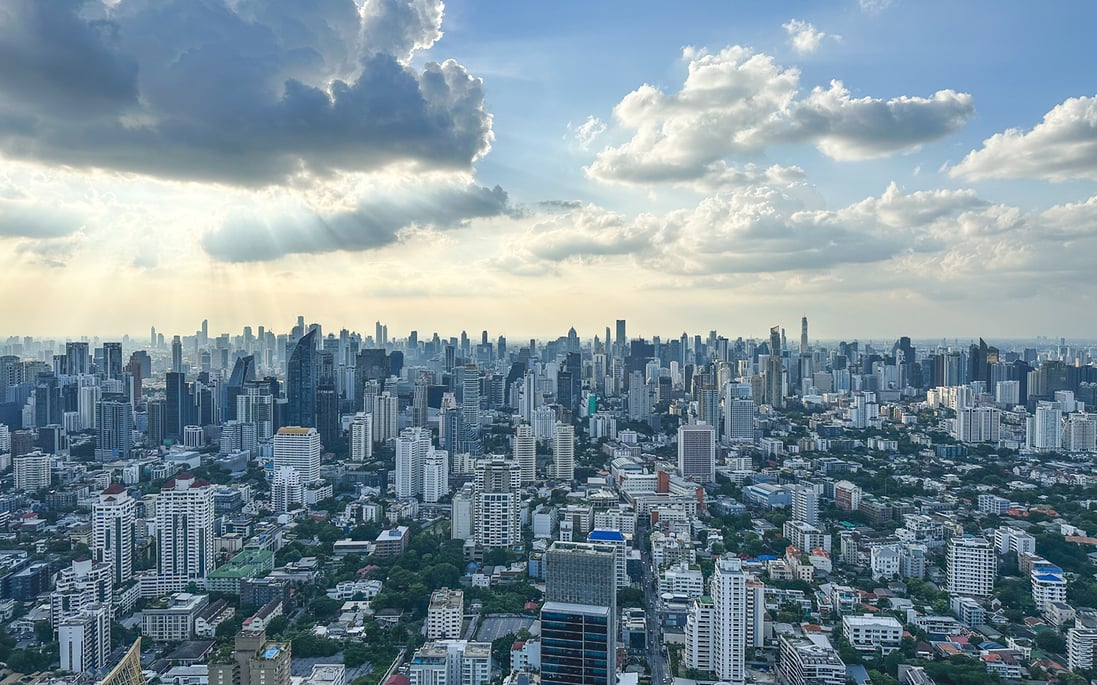
"Working across Asia, I found myself drawn to Bangkok — to its open, tolerant embrace of diversity, and to a character I found genuinely unique.
Looking at the property market, land available for new development in central Bangkok is limited, so recently built condominiums tend to offer smaller units, and their designs increasingly resemble one another. Older condominiums, by contrast, often come with far more generous floor space, and that segment of the market has been growing steadily year on year. It felt like there was a real opportunity in that gap.
But more than anything, what stayed with me was a sense that something was beginning to shift."
For seven years, Omoto had visited Bangkok every few months. It was during these visits that he began to sense a shift echoing what Japan itself had gone through — one in which renovation gradually becomes an accepted, ordinary way to find a home.
"When I was an architecture student in the 2000s, Japan was still firmly in a 'new-build-only' mindset. When people bought a home, it was almost always new, even though its value would start to decline the moment the purchase was made.
Around the same time, though, if you looked a little more broadly, renovated cafés, shops, and entire buildings started to appear across the commercial world. That same movement is already under way in Bangkok today."
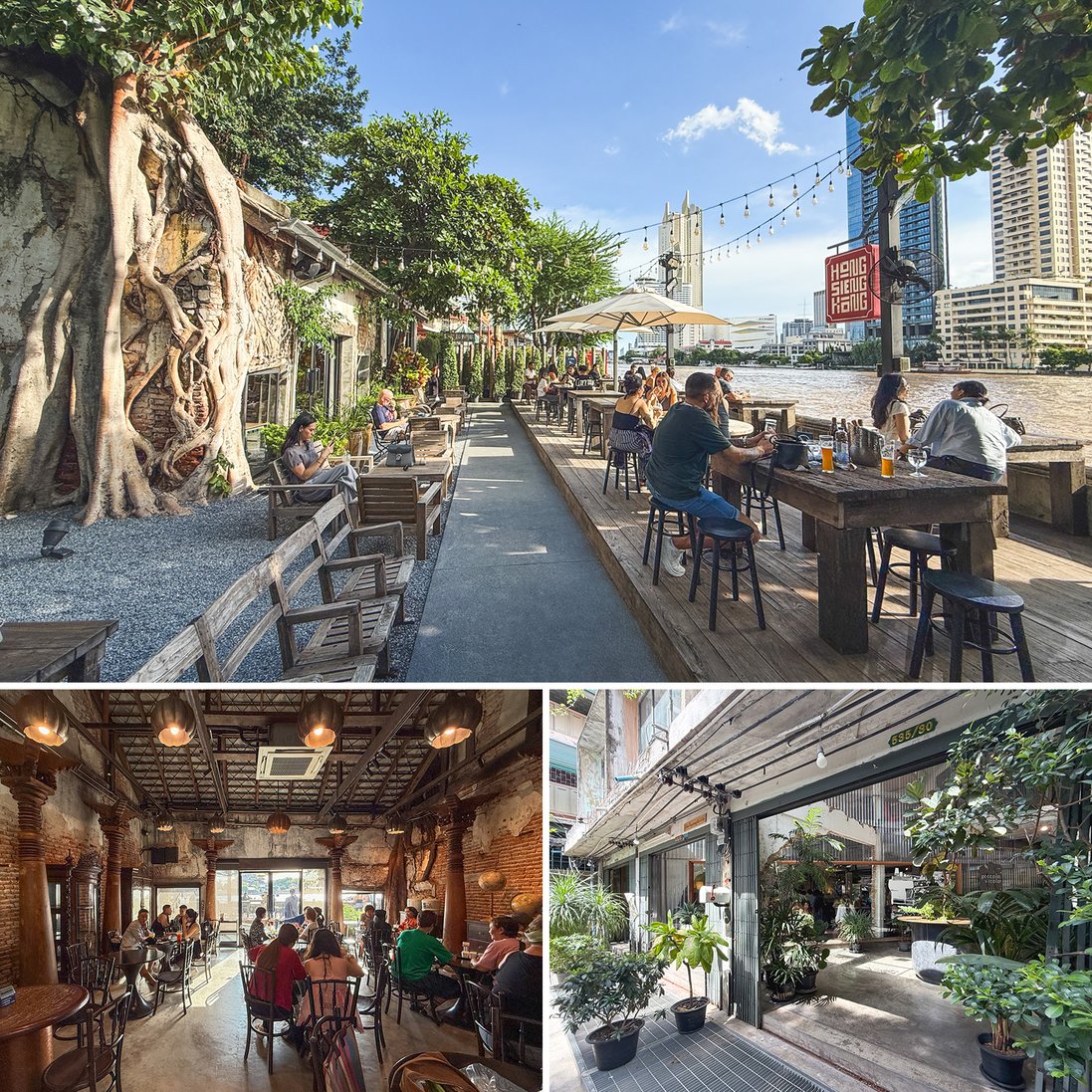
Renovation — the practice of giving new life to what already exists — first entered public consciousness through these commercial spaces before slowly making its way into homes. As design-conscious individuals began renovating their own homes, interiors shaped by personal taste and thoughtful floor plans started appearing in art, culture, and architecture magazines. Omoto believes Bangkok may be on the cusp of a similar shift, moving from commercial spaces into people's homes.
"Renovation isn't only about space and design. An existing property can be acquired at a significantly lower price than a new build , and even after factoring in renovation costs, the total is still considerably lower. On top of that, its resale value tends to hold up better than that of a new build. I suspect people in Bangkok haven't quite realised that yet."
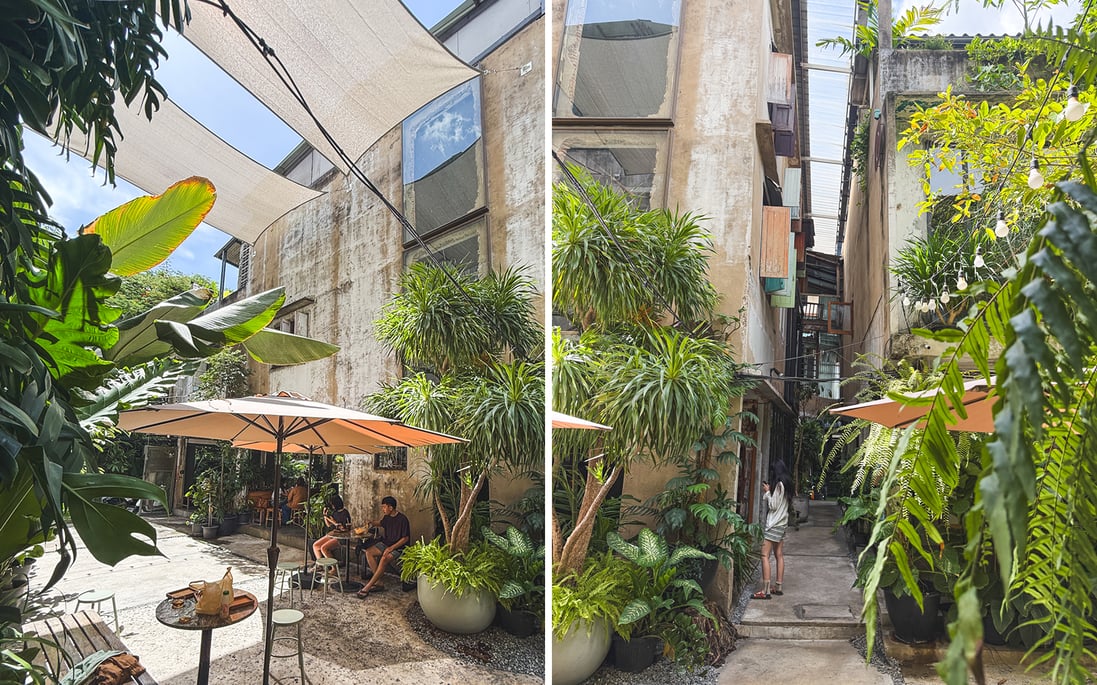
Omoto could have pursued the resale business entirely in-house. Instead, he chose to partner with RENOVERU. Why?
"While working in Japan, I once converted a waterside building together with an outside company. We could have handled everything ourselves, but collaborating with outside experts let us reach a real breakthrough — an experience I've never forgotten.
When we began planning this project, I met Yamashita, RENOVERU's CEO. His character, his drive, the pace at which he works, and the way he shows up on-site himself — all of it left an impression on me, and I knew I wanted to work with him."
Asoke: A Key Bangkok Transit Hub with Enduring Value
Convinced of the potential in Bangkok's property-revitalisation market, Omoto set out with a representative from RENOVERU (Thailand) to find the right condominium. That search led him to Las Colinas.
"Las Colinas' nearest station, Asoke, is where the BTS Sukhumvit Line — Bangkok's main artery — meets the MRT Blue Line. As one of Bangkok's key transit hubs,it has, the second-highest passenger volume in the city. It sits right beside one of Bangkok's key transit hubs, in a commercial and business district that's always alive with energy.
Because it also connects directly to Bangkok's other CBDs — Siam, Silom, and Phrom Phong — without a single transfer, I'd compare it to Shibuya, if I had to draw a Tokyo parallel. It's genuinely right in front of the station; people are often surprised to learn it isn't a hotel."
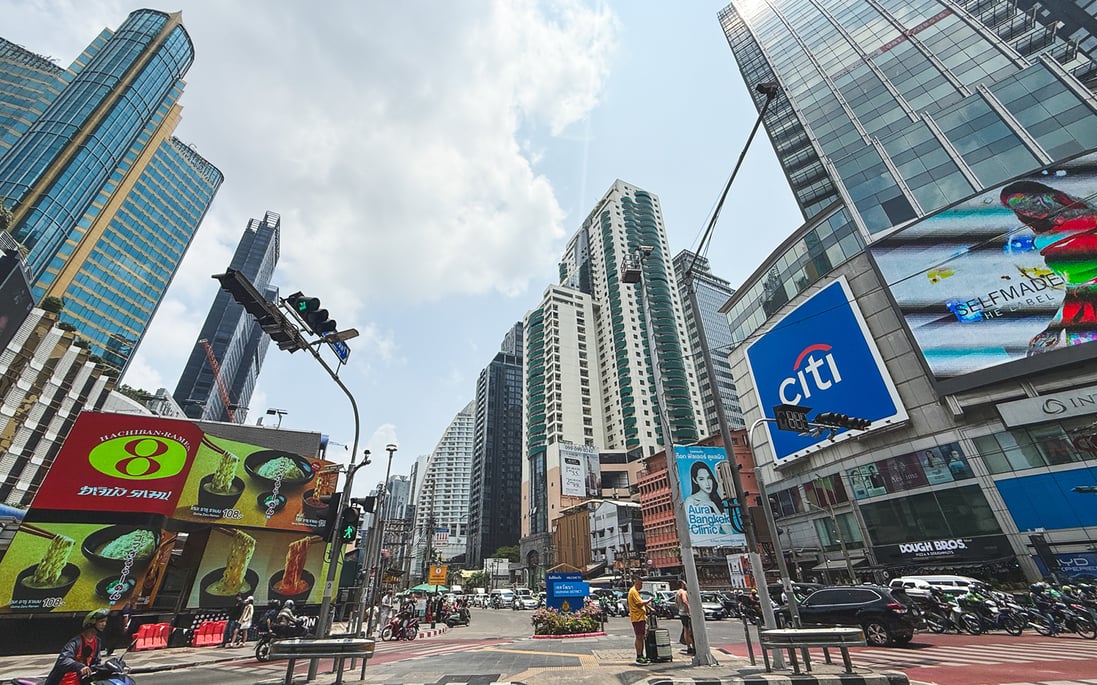
Being close to a major transit hub means more than a lively neighbourhood — it also means easy access to the rest of the city by train. Its position on a major road makes driving convenient too, though that same road is one of the city's traffic hotspots.
"My impression is that many affluent Thais own spacious homes, keep a home in the suburbs where they can relax. It made me think there might be an appeal in a two-base lifestyle — living here on weekdays to avoid the commute and traffic, then heading to the suburbs on weekends. Las Colinas is also close to a highway entrance, making it easy to drive in any direction, including to the airport.
For foreign residents in particular, being minutes from a transit hub is the biggest draw. As the city grows denser, that kind of location only becomes rarer — and I think it's an asset that will hold its value for generations to come."
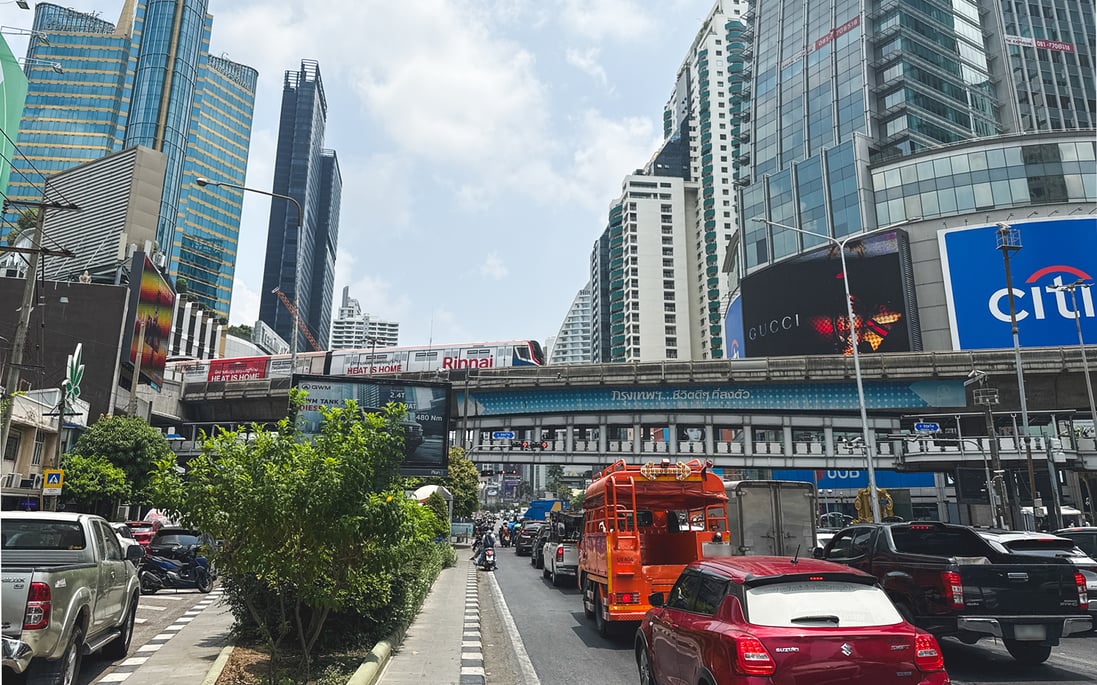
Condominiums are everywhere in the city, but one built on a site like this is genuinely hard to come by. That conviction is what pushed Omoto to move forward with the purchase.
Years Passed Are the Proof of Value
Facing the towering Terminal21 shopping mall, and within walking distance of Em Quartier, Emporium, and other globally recognised retail destinations, this is a location with foot traffic at all hours — which is exactly why Omoto paid such close attention to how the building had been managed.
"Since its completion, the building has been continuously overseen by its juristic person. Beyond careful technical maintenance, the staff know every resident by face, and they respond immediately if someone unfamiliar enters the building. That kind of attentive, human security is a value that's been carried forward for thirty years."
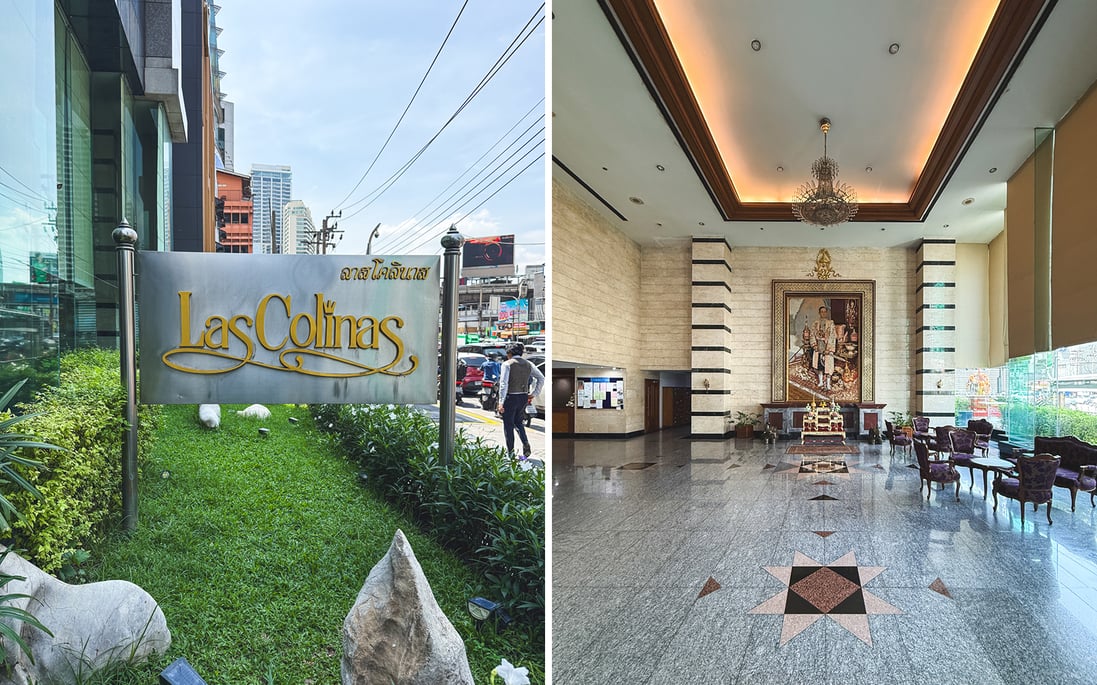
"Before purchasing, I sat for a while on a bench by the entrance, just watching who came and went. I saw a number of well-dressed, older residents — likely original owners from when the units were first sold. If people like that had chosen to live here, I thought, this building had to be the right one."
The advantage of an older condominium is that its management history and its residents are already visible — you can get a clear sense of the community that has already formed there and how the building has been cared for. That's a sharp contrast to a new building, where neither the future management nor the future neighbours are yet known.
"What's more, the building was designed by senior engineers who graduated from Chulalongkorn University, often called the 'University of Tokyo of Thailand,' and built to a standard that couldn't be replicated at today's market cost. The generous scale of the shared lobby, for instance, reflects an era before floor space was priced and sold by the square metre. The materials, the structural specifications, the proportions — none of it could be reproduced at today's construction costs."
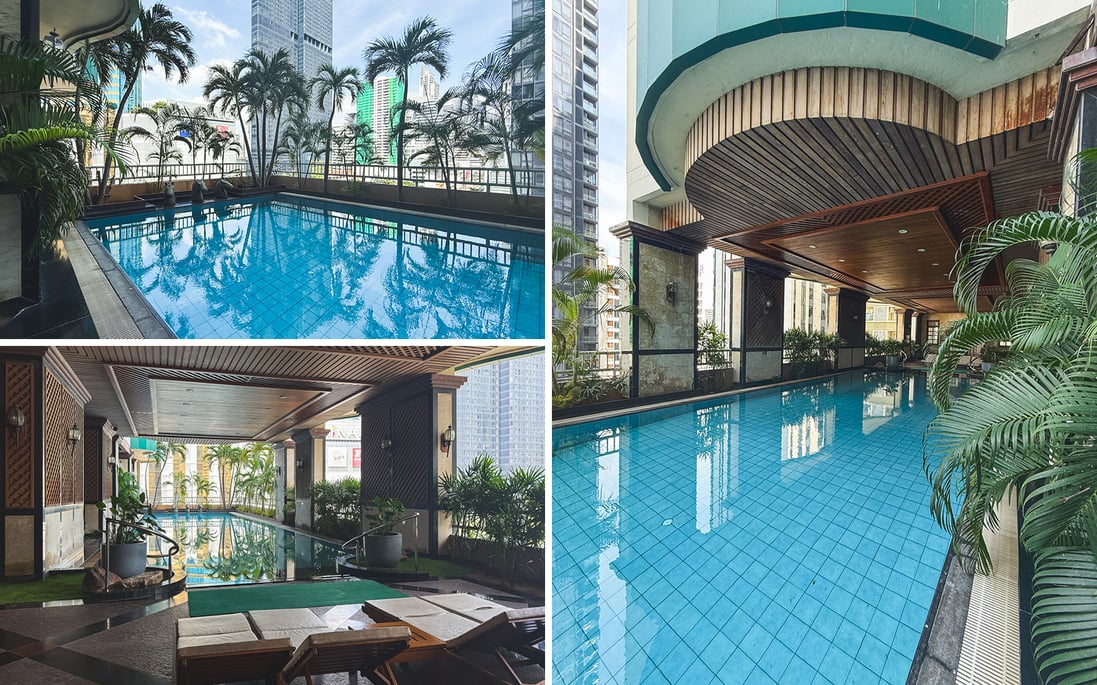
High ceilings crowned with glittering chandeliers, marble floors and walls, a pool and gym finished generously in timber — the design choices of thirty years ago have aged well, carefully lived in and maintained ever since.
A View Found Nowhere Else, From the Corner of an Intersection
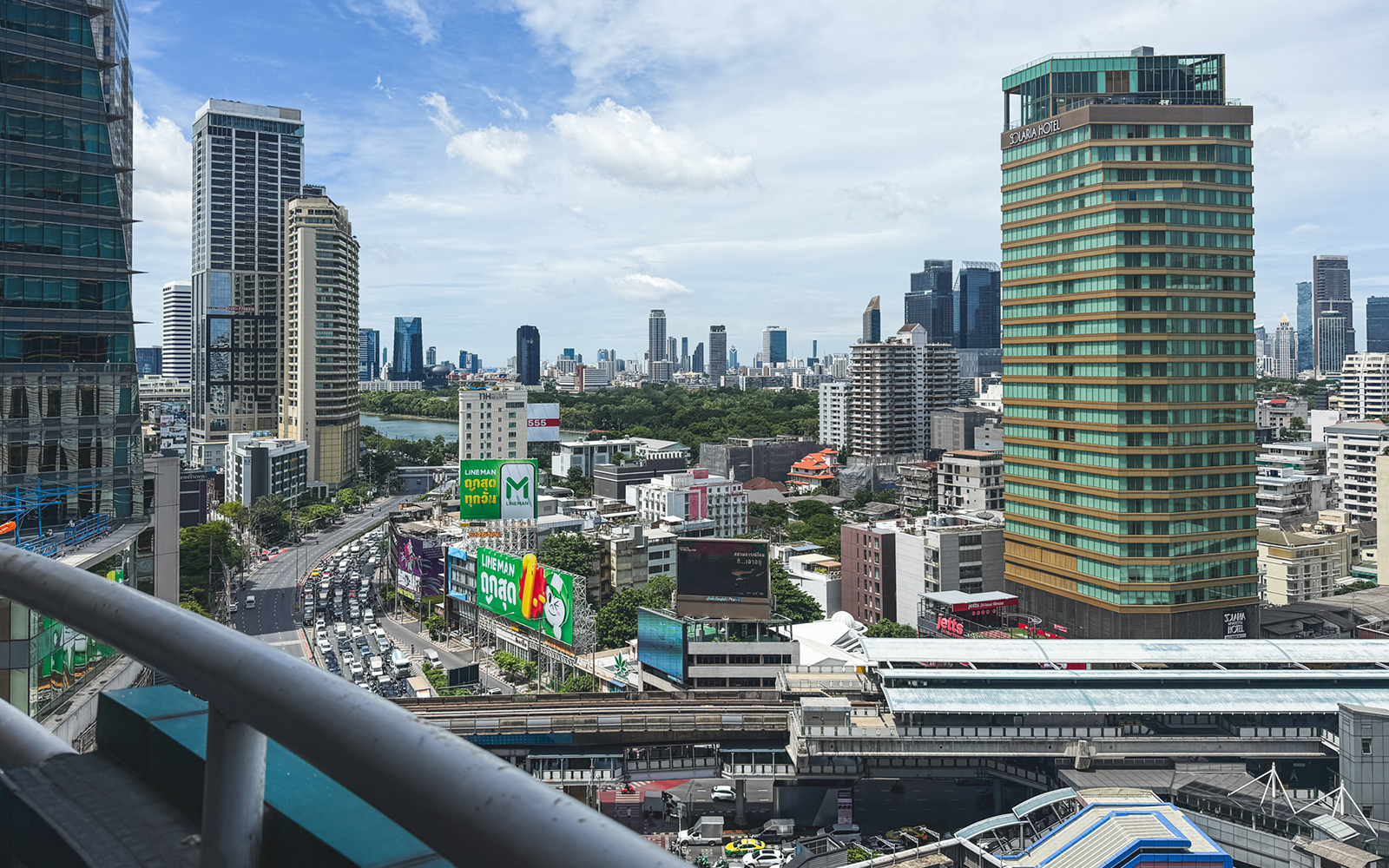
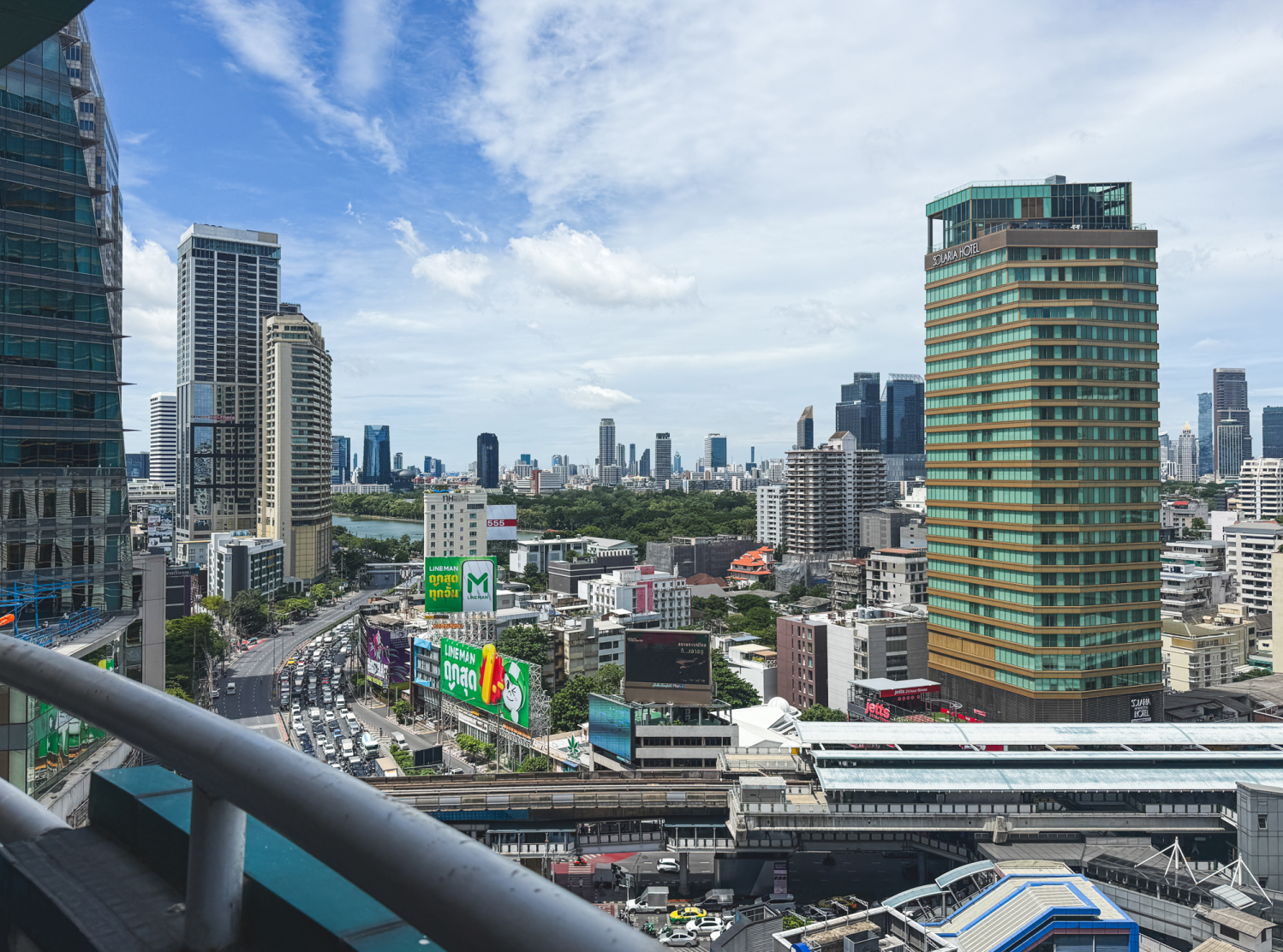
What ultimately sealed the decision was the view: the dynamic panorama visible through the corner windows and balcony.
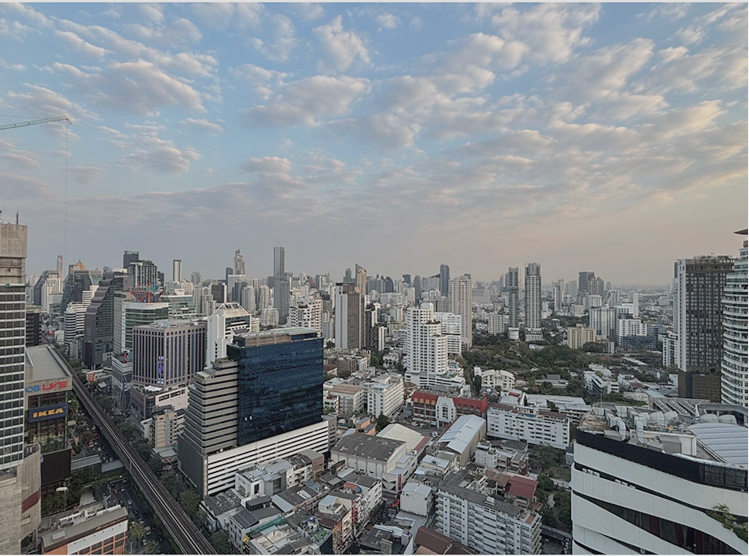
"This is the southwest corner unit — the one with the best view in the entire building. The area around the station is dense with high-rises, but because we're near a major intersection, there's real distance between this building and the next, and beyond the rail line you can see the greenery of Benjakitti Park. The sunsets, and the night views, are genuinely beautiful. Living here, you feel every day that you're in the heart of Bangkok."
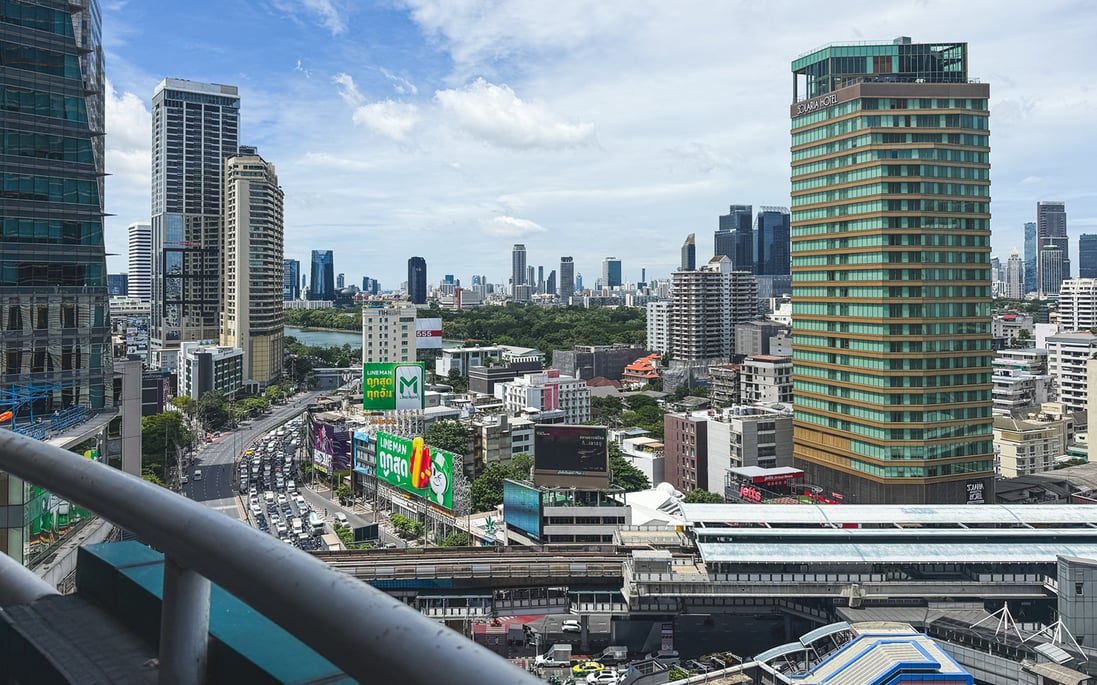
With a wide road and a transit hub directly in front of the building, this view is unlikely to change significantly, and sitting on the 18th floor only helps.
"At 166 square metres, this unit belongs to a size category that's become rare in new developments in the city centre. And as rising construction costs push more new buildings toward mechanical parking systems, this unit comes with two parking spaces in a conventional, non-mechanical car park — another significant point of distinction."
A transit and business hub, a well-managed condominium, a view found nowhere else, generous floor space, and two dedicated parking spaces. Here, every element comes together.
Bringing What Japan Has Learned to Bangkok's Future
This is the company's first venture into revitalising an existing condominium. We asked Omoto what he wants to promise future owners.
"Property transactions in Bangkok are typically conducted on an as-is basis, but as the seller, I want to offer a period during which we stand behind the property. In the interest of transparency, we'll also disclose the full renovation history. We intend to do everything we can so that owners can live here with peace of mind."
Finally, Omoto spoke, with a clear and steady gaze, about the future he hopes to build in Bangkok.
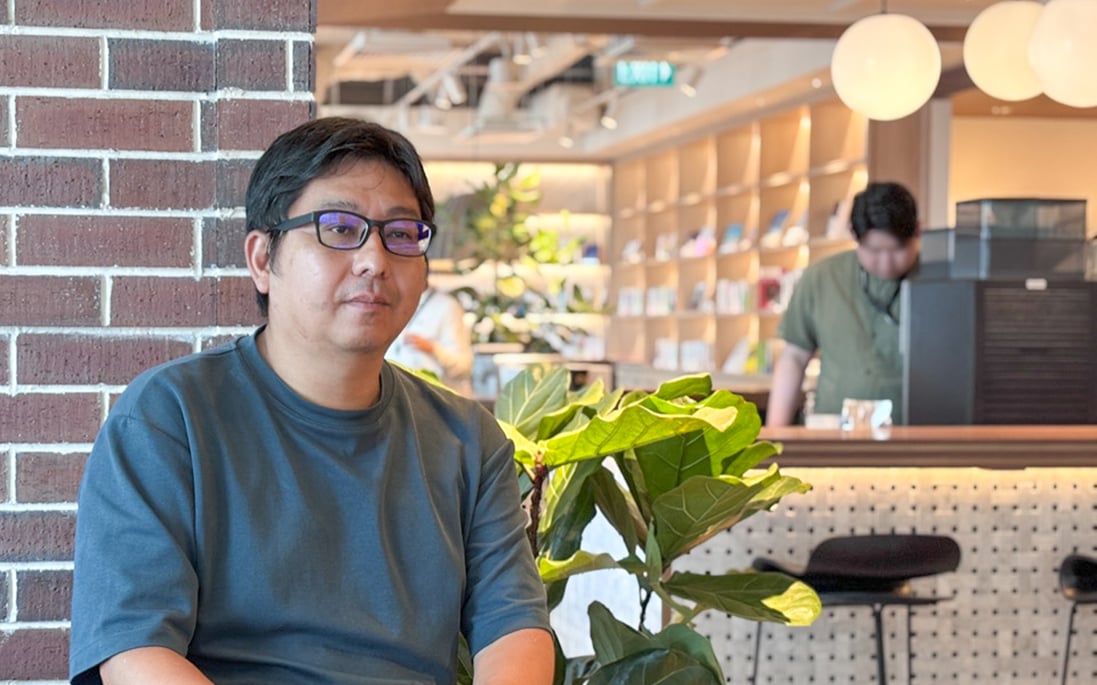
"Just as a range of players entered the renovation industry in Japan, I hope this project will spark interest from a wide range of organisations and companies, and eventually, perhaps, from government bodies as well.
This isn't something for any single company to own. I want us to build, hand in hand, a future in which renovation becomes a pillar of how people live in Bangkok."
The Next Chapter
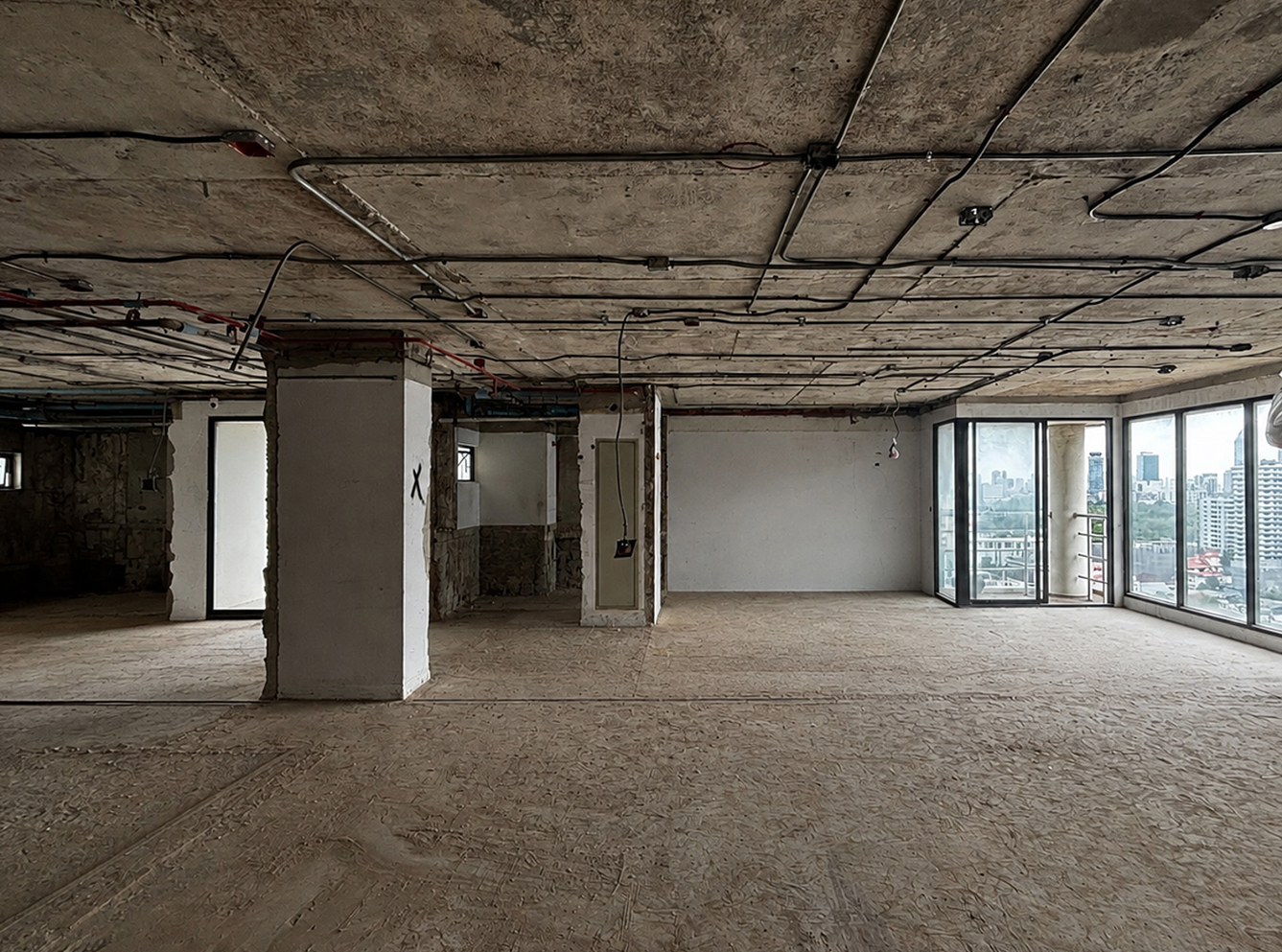
In the next JOURNAL, Vol. 3 will follow Umbra's renovation in detail — the concepts behind its layout and interiors, what sets it apart from a typical older Japanese apartment, and what it takes to build on the ground in Bangkok. We hope you'll join us.
Journal
Contact
Begin a conversation with us;
Whether you're planning a renovation, considering a property, or exploring what's possible, we'd be pleased to start the conversation.